
Unlocking the Potential of 3D Printing for Industrial Applications

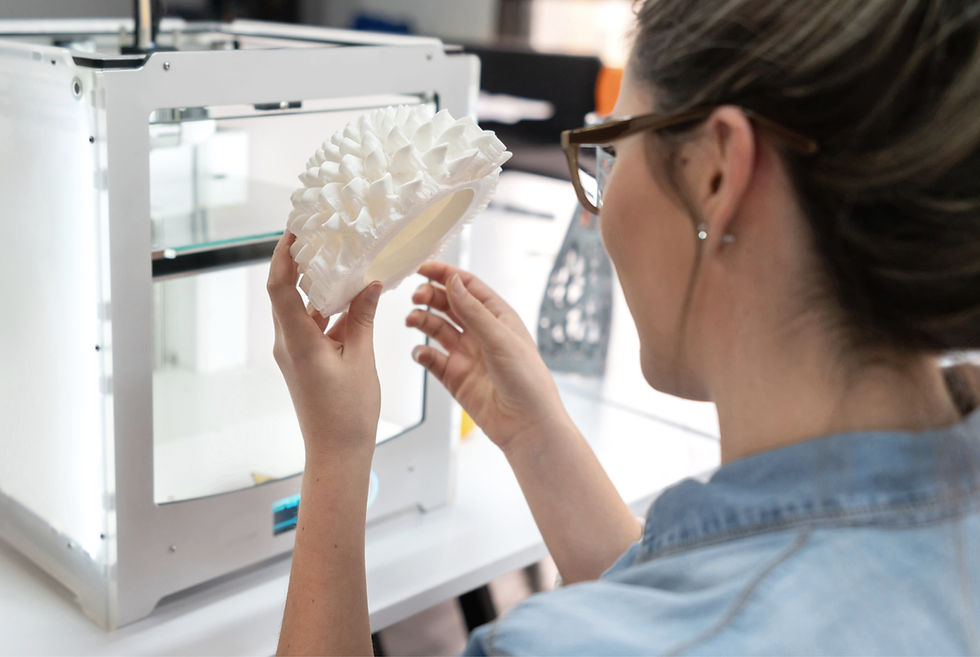
Unlocking the Potential of 3D Printing for Industrial Applications Image Description: The image shows a 3D printer in action, creating a complex industrial part. The printer is a large machine with various components and wires. It is printing layer by layer, building up the part with precision. The part being printed is a mechanical component with intricate details and precise measurements. The image represents the potential of 3D printing technology for industrial applications, showcasing its ability to create complex and customized parts with ease. In recent years, 3D printing technology has revolutionized the manufacturing industry, offering endless possibilities for industrial applications. From rapid prototyping to customized production, 3D printing has unlocked a new level of efficiency and flexibility. In this blog post, we will explore the potential of 3D printing for industrial applications and discuss how it can benefit businesses in various sectors. One of the key advantages of 3D printing in industrial applications is its ability to create complex and customized parts with ease. Traditional manufacturing methods often struggle with intricate designs and precise measurements, but 3D printing can effortlessly produce even the most intricate components. The layer-by-layer printing process allows for the creation of complex geometries and intricate details that would be impossible to achieve with traditional manufacturing techniques. Furthermore, 3D printing offers significant time and cost savings for industrial applications. With traditional manufacturing methods, creating a prototype or producing a small batch of customized parts can be a lengthy and expensive process. However, 3D printing eliminates the need for costly molds and tooling, allowing for rapid prototyping and on-demand production. This not only reduces production costs but also accelerates the product development cycle, enabling businesses to bring new products to market faster. Another advantage of 3D printing for industrial applications is the ability to optimize designs for specific purposes. With traditional manufacturing methods, design modifications can be time-consuming and costly. However, with 3D printing, design iterations can be easily made and tested, allowing for continuous improvement and optimization. This flexibility enables businesses to create products that are tailored to their specific needs and requirements, resulting in improved performance and functionality. Moreover, 3D printing technology offers sustainability benefits for industrial applications. Traditional manufacturing methods often generate a significant amount of waste, as excess materials are discarded during the production process. In contrast, 3D printing is an additive manufacturing process, meaning that it only uses the necessary amount of material to create the desired object. This reduces material waste and contributes to a more sustainable manufacturing process. To fully unlock the potential of 3D printing for industrial applications, businesses need to embrace this technology and integrate it into their manufacturing processes. By investing in 3D printers and training their workforce, businesses can leverage the benefits of 3D printing to improve efficiency, reduce costs, and enhance product quality. In conclusion, 3D printing technology has the potential to revolutionize industrial applications. Its ability to create complex and customized parts, along with time and cost savings, design optimization, and sustainability benefits, make it a game-changer for businesses in various sectors. By embracing 3D printing, businesses can unlock new opportunities for innovation and growth in the ever-evolving manufacturing industry.


Comments